01101001 01101110
fn init() -> Result<()>
for x in 0..buf.len()
load(addr, 0xFF)
sys.run(0x4A, flags)
if val > 0 { dispatch() }
>> 0x00: READY
loop { poll(); yield; }
stream.flush()
0xDEAD :: 0xBEEF
bind(sock, &addr, len)
pub fn connect(host: &str)
match state {
State::Init => boot(),
State::Run => tick(),
_ => halt(),
}
reg[0x3] = 0b11001010
clk.tick()
assert!(val != null)
>> SIGNAL RECEIVED
buf[i] ^= key[i % klen]
let n = read(fd, buf, 64)
while !done { step(); }
push(stack, frame)
0x7F :: OK
type Handler = fn(Ctx)
emit(Event::Data, payload)
select! { rx => handle(rx) }
spawn(async move { run() })
>> 0x01: PROCESSING
map.insert(k, v)
drain().collect::<Vec<_>>()
let _ = tx.send(msg)
timeout(Duration::ms(100))
>> CHECKSUM PASS
fn encode(src: &[u8]) -> Vec
pipe.write_all(&frame)
crc32(data, len)
>> 0x00FF: ACK
schedule(task, interval)
lock.acquire()
>> SYNC COMPLETE
release(ptr)
0x00 0x00 0x00 0x01
watchdog.reset()
>> LINK ESTABLISHED
fn poll(&mut self) -> Poll
waker.wake_by_ref()
cx.waker().clone()
01101001 01101110
fn init() -> Result<()>
for x in 0..buf.len()
load(addr, 0xFF)
sys.run(0x4A, flags)
if val > 0 { dispatch() }
>> 0x00: READY
loop { poll(); yield; }
stream.flush()
0xDEAD :: 0xBEEF
bind(sock, &addr, len)
pub fn connect(host: &str)
match state {
State::Init => boot(),
State::Run => tick(),
_ => halt(),
}
reg[0x3] = 0b11001010
clk.tick()
assert!(val != null)
>> SIGNAL RECEIVED
buf[i] ^= key[i % klen]
let n = read(fd, buf, 64)
while !done { step(); }
push(stack, frame)
0x7F :: OK
type Handler = fn(Ctx)
emit(Event::Data, payload)
select! { rx => handle(rx) }
spawn(async move { run() })
>> 0x01: PROCESSING
map.insert(k, v)
drain().collect::<Vec<_>>()
let _ = tx.send(msg)
timeout(Duration::ms(100))
>> CHECKSUM PASS
fn encode(src: &[u8]) -> Vec
pipe.write_all(&frame)
crc32(data, len)
>> 0x00FF: ACK
schedule(task, interval)
lock.acquire()
>> SYNC COMPLETE
release(ptr)
0x00 0x00 0x00 0x01
watchdog.reset()
>> LINK ESTABLISHED
fn poll(&mut self) -> Poll
waker.wake_by_ref()
cx.waker().clone()
stream.flush()
0xDEAD :: 0xBEEF
bind(sock, &addr, len)
pub fn connect(host: &str)
match state {
State::Init => boot(),
State::Run => tick(),
_ => halt(),
}
reg[0x3] = 0b11001010
clk.tick()
assert!(val != null)
>> SIGNAL RECEIVED
buf[i] ^= key[i % klen]
let n = read(fd, buf, 64)
while !done { step(); }
push(stack, frame)
0x7F :: OK
type Handler = fn(Ctx)
emit(Event::Data, payload)
select! { rx => handle(rx) }
spawn(async move { run() })
>> 0x01: PROCESSING
map.insert(k, v)
drain().collect::<Vec<_>>()
let _ = tx.send(msg)
timeout(Duration::ms(100))
>> CHECKSUM PASS
fn encode(src: &[u8]) -> Vec
pipe.write_all(&frame)
crc32(data, len)
>> 0x00FF: ACK
schedule(task, interval)
lock.acquire()
>> SYNC COMPLETE
release(ptr)
0x00 0x00 0x00 0x01
watchdog.reset()
>> LINK ESTABLISHED
fn poll(&mut self) -> Poll
waker.wake_by_ref()
cx.waker().clone()
01101001 01101110
fn init() -> Result<()>
for x in 0..buf.len()
load(addr, 0xFF)
sys.run(0x4A, flags)
if val > 0 { dispatch() }
>> 0x00: READY
loop { poll(); yield; }
stream.flush()
0xDEAD :: 0xBEEF
bind(sock, &addr, len)
pub fn connect(host: &str)
match state {
State::Init => boot(),
State::Run => tick(),
_ => halt(),
}
reg[0x3] = 0b11001010
clk.tick()
assert!(val != null)
>> SIGNAL RECEIVED
buf[i] ^= key[i % klen]
let n = read(fd, buf, 64)
while !done { step(); }
push(stack, frame)
0x7F :: OK
type Handler = fn(Ctx)
emit(Event::Data, payload)
select! { rx => handle(rx) }
spawn(async move { run() })
>> 0x01: PROCESSING
map.insert(k, v)
drain().collect::<Vec<_>>()
let _ = tx.send(msg)
timeout(Duration::ms(100))
>> CHECKSUM PASS
fn encode(src: &[u8]) -> Vec
pipe.write_all(&frame)
crc32(data, len)
>> 0x00FF: ACK
schedule(task, interval)
lock.acquire()
>> SYNC COMPLETE
release(ptr)
0x00 0x00 0x00 0x01
watchdog.reset()
>> LINK ESTABLISHED
fn poll(&mut self) -> Poll
waker.wake_by_ref()
cx.waker().clone()
01101001 01101110
fn init() -> Result<()>
for x in 0..buf.len()
load(addr, 0xFF)
sys.run(0x4A, flags)
if val > 0 { dispatch() }
>> 0x00: READY
loop { poll(); yield; }
}
reg[0x3] = 0b11001010
clk.tick()
assert!(val != null)
>> SIGNAL RECEIVED
buf[i] ^= key[i % klen]
let n = read(fd, buf, 64)
while !done { step(); }
push(stack, frame)
0x7F :: OK
type Handler = fn(Ctx)
emit(Event::Data, payload)
select! { rx => handle(rx) }
spawn(async move { run() })
>> 0x01: PROCESSING
map.insert(k, v)
drain().collect::<Vec<_>>()
let _ = tx.send(msg)
timeout(Duration::ms(100))
>> CHECKSUM PASS
fn encode(src: &[u8]) -> Vec
pipe.write_all(&frame)
crc32(data, len)
>> 0x00FF: ACK
schedule(task, interval)
lock.acquire()
>> SYNC COMPLETE
release(ptr)
0x00 0x00 0x00 0x01
watchdog.reset()
>> LINK ESTABLISHED
fn poll(&mut self) -> Poll
waker.wake_by_ref()
cx.waker().clone()
01101001 01101110
fn init() -> Result<()>
for x in 0..buf.len()
load(addr, 0xFF)
sys.run(0x4A, flags)
if val > 0 { dispatch() }
>> 0x00: READY
loop { poll(); yield; }
stream.flush()
0xDEAD :: 0xBEEF
bind(sock, &addr, len)
pub fn connect(host: &str)
match state {
State::Init => boot(),
State::Run => tick(),
_ => halt(),
}
reg[0x3] = 0b11001010
clk.tick()
assert!(val != null)
>> SIGNAL RECEIVED
buf[i] ^= key[i % klen]
let n = read(fd, buf, 64)
while !done { step(); }
push(stack, frame)
0x7F :: OK
type Handler = fn(Ctx)
emit(Event::Data, payload)
select! { rx => handle(rx) }
spawn(async move { run() })
>> 0x01: PROCESSING
map.insert(k, v)
drain().collect::<Vec<_>>()
let _ = tx.send(msg)
timeout(Duration::ms(100))
>> CHECKSUM PASS
fn encode(src: &[u8]) -> Vec
pipe.write_all(&frame)
crc32(data, len)
>> 0x00FF: ACK
schedule(task, interval)
lock.acquire()
>> SYNC COMPLETE
release(ptr)
0x00 0x00 0x00 0x01
watchdog.reset()
>> LINK ESTABLISHED
fn poll(&mut self) -> Poll
waker.wake_by_ref()
cx.waker().clone()
01101001 01101110
fn init() -> Result<()>
for x in 0..buf.len()
load(addr, 0xFF)
sys.run(0x4A, flags)
if val > 0 { dispatch() }
>> 0x00: READY
loop { poll(); yield; }
stream.flush()
0xDEAD :: 0xBEEF
bind(sock, &addr, len)
pub fn connect(host: &str)
match state {
State::Init => boot(),
State::Run => tick(),
_ => halt(),
push(stack, frame)
0x7F :: OK
type Handler = fn(Ctx)
emit(Event::Data, payload)
select! { rx => handle(rx) }
spawn(async move { run() })
>> 0x01: PROCESSING
map.insert(k, v)
drain().collect::<Vec<_>>()
let _ = tx.send(msg)
timeout(Duration::ms(100))
>> CHECKSUM PASS
fn encode(src: &[u8]) -> Vec
pipe.write_all(&frame)
crc32(data, len)
>> 0x00FF: ACK
schedule(task, interval)
lock.acquire()
>> SYNC COMPLETE
release(ptr)
0x00 0x00 0x00 0x01
watchdog.reset()
>> LINK ESTABLISHED
fn poll(&mut self) -> Poll
waker.wake_by_ref()
cx.waker().clone()
01101001 01101110
fn init() -> Result<()>
for x in 0..buf.len()
load(addr, 0xFF)
sys.run(0x4A, flags)
if val > 0 { dispatch() }
>> 0x00: READY
loop { poll(); yield; }
stream.flush()
0xDEAD :: 0xBEEF
bind(sock, &addr, len)
pub fn connect(host: &str)
match state {
State::Init => boot(),
State::Run => tick(),
_ => halt(),
}
reg[0x3] = 0b11001010
clk.tick()
assert!(val != null)
>> SIGNAL RECEIVED
buf[i] ^= key[i % klen]
let n = read(fd, buf, 64)
while !done { step(); }
push(stack, frame)
0x7F :: OK
type Handler = fn(Ctx)
emit(Event::Data, payload)
select! { rx => handle(rx) }
spawn(async move { run() })
>> 0x01: PROCESSING
map.insert(k, v)
drain().collect::<Vec<_>>()
let _ = tx.send(msg)
timeout(Duration::ms(100))
>> CHECKSUM PASS
fn encode(src: &[u8]) -> Vec
pipe.write_all(&frame)
crc32(data, len)
>> 0x00FF: ACK
schedule(task, interval)
lock.acquire()
>> SYNC COMPLETE
release(ptr)
0x00 0x00 0x00 0x01
watchdog.reset()
>> LINK ESTABLISHED
fn poll(&mut self) -> Poll
waker.wake_by_ref()
cx.waker().clone()
01101001 01101110
fn init() -> Result<()>
for x in 0..buf.len()
load(addr, 0xFF)
sys.run(0x4A, flags)
if val > 0 { dispatch() }
>> 0x00: READY
loop { poll(); yield; }
stream.flush()
0xDEAD :: 0xBEEF
bind(sock, &addr, len)
pub fn connect(host: &str)
match state {
State::Init => boot(),
State::Run => tick(),
_ => halt(),
}
reg[0x3] = 0b11001010
clk.tick()
assert!(val != null)
>> SIGNAL RECEIVED
buf[i] ^= key[i % klen]
let n = read(fd, buf, 64)
while !done { step(); }
drain().collect::<Vec<_>>()
let _ = tx.send(msg)
timeout(Duration::ms(100))
>> CHECKSUM PASS
fn encode(src: &[u8]) -> Vec
pipe.write_all(&frame)
crc32(data, len)
>> 0x00FF: ACK
schedule(task, interval)
lock.acquire()
>> SYNC COMPLETE
release(ptr)
0x00 0x00 0x00 0x01
watchdog.reset()
>> LINK ESTABLISHED
fn poll(&mut self) -> Poll
waker.wake_by_ref()
cx.waker().clone()
01101001 01101110
fn init() -> Result<()>
for x in 0..buf.len()
load(addr, 0xFF)
sys.run(0x4A, flags)
if val > 0 { dispatch() }
>> 0x00: READY
loop { poll(); yield; }
stream.flush()
0xDEAD :: 0xBEEF
bind(sock, &addr, len)
pub fn connect(host: &str)
match state {
State::Init => boot(),
State::Run => tick(),
_ => halt(),
}
reg[0x3] = 0b11001010
clk.tick()
assert!(val != null)
>> SIGNAL RECEIVED
buf[i] ^= key[i % klen]
let n = read(fd, buf, 64)
while !done { step(); }
push(stack, frame)
0x7F :: OK
type Handler = fn(Ctx)
emit(Event::Data, payload)
select! { rx => handle(rx) }
spawn(async move { run() })
>> 0x01: PROCESSING
map.insert(k, v)
drain().collect::<Vec<_>>()
let _ = tx.send(msg)
timeout(Duration::ms(100))
>> CHECKSUM PASS
fn encode(src: &[u8]) -> Vec
pipe.write_all(&frame)
crc32(data, len)
>> 0x00FF: ACK
schedule(task, interval)
lock.acquire()
>> SYNC COMPLETE
release(ptr)
0x00 0x00 0x00 0x01
watchdog.reset()
>> LINK ESTABLISHED
fn poll(&mut self) -> Poll
waker.wake_by_ref()
cx.waker().clone()
01101001 01101110
fn init() -> Result<()>
for x in 0..buf.len()
load(addr, 0xFF)
sys.run(0x4A, flags)
if val > 0 { dispatch() }
>> 0x00: READY
loop { poll(); yield; }
stream.flush()
0xDEAD :: 0xBEEF
bind(sock, &addr, len)
pub fn connect(host: &str)
match state {
State::Init => boot(),
State::Run => tick(),
_ => halt(),
}
reg[0x3] = 0b11001010
clk.tick()
assert!(val != null)
>> SIGNAL RECEIVED
buf[i] ^= key[i % klen]
let n = read(fd, buf, 64)
while !done { step(); }
push(stack, frame)
0x7F :: OK
type Handler = fn(Ctx)
emit(Event::Data, payload)
select! { rx => handle(rx) }
spawn(async move { run() })
>> 0x01: PROCESSING
map.insert(k, v)
bind(sock, &addr, len)
pub fn connect(host: &str)
match state {
State::Init => boot(),
State::Run => tick(),
_ => halt(),
}
reg[0x3] = 0b11001010
clk.tick()
assert!(val != null)
>> SIGNAL RECEIVED
buf[i] ^= key[i % klen]
let n = read(fd, buf, 64)
while !done { step(); }
push(stack, frame)
0x7F :: OK
type Handler = fn(Ctx)
emit(Event::Data, payload)
select! { rx => handle(rx) }
spawn(async move { run() })
>> 0x01: PROCESSING
map.insert(k, v)
drain().collect::<Vec<_>>()
let _ = tx.send(msg)
timeout(Duration::ms(100))
>> CHECKSUM PASS
fn encode(src: &[u8]) -> Vec
pipe.write_all(&frame)
crc32(data, len)
>> 0x00FF: ACK
schedule(task, interval)
lock.acquire()
>> SYNC COMPLETE
release(ptr)
0x00 0x00 0x00 0x01
watchdog.reset()
>> LINK ESTABLISHED
fn poll(&mut self) -> Poll
waker.wake_by_ref()
cx.waker().clone()
01101001 01101110
fn init() -> Result<()>
for x in 0..buf.len()
load(addr, 0xFF)
sys.run(0x4A, flags)
if val > 0 { dispatch() }
>> 0x00: READY
loop { poll(); yield; }
stream.flush()
0xDEAD :: 0xBEEF
bind(sock, &addr, len)
pub fn connect(host: &str)
match state {
State::Init => boot(),
State::Run => tick(),
_ => halt(),
}
reg[0x3] = 0b11001010
clk.tick()
assert!(val != null)
>> SIGNAL RECEIVED
buf[i] ^= key[i % klen]
let n = read(fd, buf, 64)
while !done { step(); }
push(stack, frame)
0x7F :: OK
type Handler = fn(Ctx)
emit(Event::Data, payload)
select! { rx => handle(rx) }
spawn(async move { run() })
>> 0x01: PROCESSING
map.insert(k, v)
drain().collect::<Vec<_>>()
let _ = tx.send(msg)
timeout(Duration::ms(100))
>> CHECKSUM PASS
fn encode(src: &[u8]) -> Vec
pipe.write_all(&frame)
crc32(data, len)
>> 0x00FF: ACK
schedule(task, interval)
lock.acquire()
>> SYNC COMPLETE
release(ptr)
0x00 0x00 0x00 0x01
watchdog.reset()
>> LINK ESTABLISHED
fn poll(&mut self) -> Poll
waker.wake_by_ref()
cx.waker().clone()
01101001 01101110
fn init() -> Result<()>
for x in 0..buf.len()
load(addr, 0xFF)
sys.run(0x4A, flags)
if val > 0 { dispatch() }
>> 0x00: READY
loop { poll(); yield; }
stream.flush()
0xDEAD :: 0xBEEF
>> SIGNAL RECEIVED
buf[i] ^= key[i % klen]
let n = read(fd, buf, 64)
while !done { step(); }
push(stack, frame)
0x7F :: OK
type Handler = fn(Ctx)
emit(Event::Data, payload)
select! { rx => handle(rx) }
spawn(async move { run() })
>> 0x01: PROCESSING
map.insert(k, v)
drain().collect::<Vec<_>>()
let _ = tx.send(msg)
timeout(Duration::ms(100))
>> CHECKSUM PASS
fn encode(src: &[u8]) -> Vec
pipe.write_all(&frame)
crc32(data, len)
>> 0x00FF: ACK
schedule(task, interval)
lock.acquire()
>> SYNC COMPLETE
release(ptr)
0x00 0x00 0x00 0x01
watchdog.reset()
>> LINK ESTABLISHED
fn poll(&mut self) -> Poll
waker.wake_by_ref()
cx.waker().clone()
01101001 01101110
fn init() -> Result<()>
for x in 0..buf.len()
load(addr, 0xFF)
sys.run(0x4A, flags)
if val > 0 { dispatch() }
>> 0x00: READY
loop { poll(); yield; }
stream.flush()
0xDEAD :: 0xBEEF
bind(sock, &addr, len)
pub fn connect(host: &str)
match state {
State::Init => boot(),
State::Run => tick(),
_ => halt(),
}
reg[0x3] = 0b11001010
clk.tick()
assert!(val != null)
>> SIGNAL RECEIVED
buf[i] ^= key[i % klen]
let n = read(fd, buf, 64)
while !done { step(); }
push(stack, frame)
0x7F :: OK
type Handler = fn(Ctx)
emit(Event::Data, payload)
select! { rx => handle(rx) }
spawn(async move { run() })
>> 0x01: PROCESSING
map.insert(k, v)
drain().collect::<Vec<_>>()
let _ = tx.send(msg)
timeout(Duration::ms(100))
>> CHECKSUM PASS
fn encode(src: &[u8]) -> Vec
pipe.write_all(&frame)
crc32(data, len)
>> 0x00FF: ACK
schedule(task, interval)
lock.acquire()
>> SYNC COMPLETE
release(ptr)
0x00 0x00 0x00 0x01
watchdog.reset()
>> LINK ESTABLISHED
fn poll(&mut self) -> Poll
waker.wake_by_ref()
cx.waker().clone()
01101001 01101110
fn init() -> Result<()>
for x in 0..buf.len()
load(addr, 0xFF)
sys.run(0x4A, flags)
if val > 0 { dispatch() }
>> 0x00: READY
loop { poll(); yield; }
stream.flush()
0xDEAD :: 0xBEEF
bind(sock, &addr, len)
pub fn connect(host: &str)
match state {
State::Init => boot(),
State::Run => tick(),
_ => halt(),
}
reg[0x3] = 0b11001010
clk.tick()
assert!(val != null)
crc32(data, len)
>> 0x00FF: ACK
schedule(task, interval)
lock.acquire()
>> SYNC COMPLETE
release(ptr)
0x00 0x00 0x00 0x01
watchdog.reset()
>> LINK ESTABLISHED
fn poll(&mut self) -> Poll
waker.wake_by_ref()
cx.waker().clone()
01101001 01101110
fn init() -> Result<()>
for x in 0..buf.len()
load(addr, 0xFF)
sys.run(0x4A, flags)
if val > 0 { dispatch() }
>> 0x00: READY
loop { poll(); yield; }
stream.flush()
0xDEAD :: 0xBEEF
bind(sock, &addr, len)
pub fn connect(host: &str)
match state {
State::Init => boot(),
State::Run => tick(),
_ => halt(),
}
reg[0x3] = 0b11001010
clk.tick()
assert!(val != null)
>> SIGNAL RECEIVED
buf[i] ^= key[i % klen]
let n = read(fd, buf, 64)
while !done { step(); }
push(stack, frame)
0x7F :: OK
type Handler = fn(Ctx)
emit(Event::Data, payload)
select! { rx => handle(rx) }
spawn(async move { run() })
>> 0x01: PROCESSING
map.insert(k, v)
drain().collect::<Vec<_>>()
let _ = tx.send(msg)
timeout(Duration::ms(100))
>> CHECKSUM PASS
fn encode(src: &[u8]) -> Vec
pipe.write_all(&frame)
crc32(data, len)
>> 0x00FF: ACK
schedule(task, interval)
lock.acquire()
>> SYNC COMPLETE
release(ptr)
0x00 0x00 0x00 0x01
watchdog.reset()
>> LINK ESTABLISHED
fn poll(&mut self) -> Poll
waker.wake_by_ref()
cx.waker().clone()
01101001 01101110
fn init() -> Result<()>
for x in 0..buf.len()
load(addr, 0xFF)
sys.run(0x4A, flags)
if val > 0 { dispatch() }
>> 0x00: READY
loop { poll(); yield; }
stream.flush()
0xDEAD :: 0xBEEF
bind(sock, &addr, len)
pub fn connect(host: &str)
match state {
State::Init => boot(),
State::Run => tick(),
_ => halt(),
}
reg[0x3] = 0b11001010
clk.tick()
assert!(val != null)
>> SIGNAL RECEIVED
buf[i] ^= key[i % klen]
let n = read(fd, buf, 64)
while !done { step(); }
push(stack, frame)
0x7F :: OK
type Handler = fn(Ctx)
emit(Event::Data, payload)
select! { rx => handle(rx) }
spawn(async move { run() })
>> 0x01: PROCESSING
map.insert(k, v)
drain().collect::<Vec<_>>()
let _ = tx.send(msg)
timeout(Duration::ms(100))
>> CHECKSUM PASS
fn encode(src: &[u8]) -> Vec
pipe.write_all(&frame)
INDIGO-NX// DEV LOG
← JOURNAL
PUBLIC6 min read

Three Pulses Per Revolution — The Frequency That Clicks

propulsionphysicssimulationgputaichipythonclaude-code

What if the pulse frequency matched the geometry?
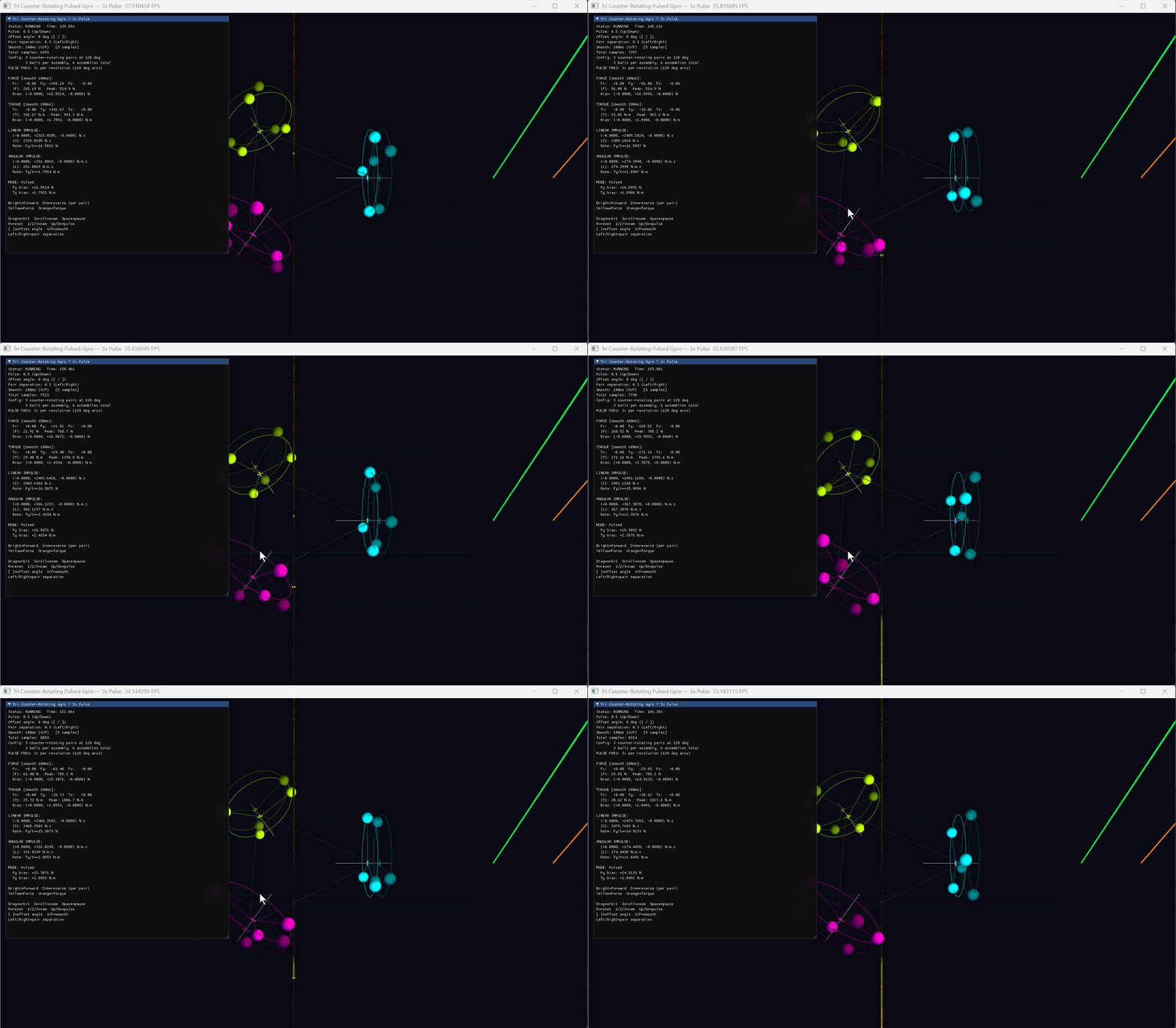
Tri counter-rotating pulsed gyro — 3x pulse frequency simulation


The Question

The counter-rotating pairs result was strong: +10.49 N of force bias from three pairs at 120-degree spacing, 37x pulsed-to-constant ratio, off-axis forces dead zero. Best configuration yet.

But looking at the pulse function — omega(t) = omega_base * (1 + pulse * cos(theta)) — something jumped out. The cosine completes one full cycle per revolution. One speed-up, one slow-down, once around the race.

The geometry is 120 degrees. Three assemblies, three arcs, three sectors. Why is the pulse only cycling once?

What if we pulse three times per revolution — one cycle per 120-degree arc?


Two Forks

I built two variants to test different interpretations of the same idea.

3x frequency: Replace cos(theta) with cos(3*theta). Every assembly still shares the same shaft angle, still perfectly synchronised. The speed just oscillates three times per lap instead of once. Simple, clean, one-line change in the physics.

Phase-locked: Each pair gets its own motor running independently, with pulse phases staggered by 120 degrees. Pair 0 peaks at 0 degrees, pair 1 at 120, pair 2 at 240. At any instant, one pair is fast, one medium, one slow. Three-phase AC applied to mechanical thrust — constant power delivery through staggered timing.

Both variants ran against the same baseline with A/B controls.


3x Frequency Results

The numbers landed fast.

3x pulsed (pulse 0.5, separation 0.3, 11,939 samples, 239 seconds):

| Axis | Force bias | Torque bias | |------|-----------|-------------| | Fx | 0.00 N | 0.00 N.m | | Fy | +15.53 N | — | | Fz | 0.00 N | 0.00 N.m | | Ty | — | +1.90 N.m |

3x constant spin control (pulse 0.0, 2,297 samples, 47 seconds):

| Axis | Force bias | Torque bias | |------|-----------|-------------| | Fy | +0.26 N | -0.36 N.m |

Pulsed-to-constant ratio: 60x.

Compare to the 1x baseline at the same separation:

| Config | Fy bias | Ty bias | Ratio | |--------|---------|---------|-------| | 1x pulse | +10.49 N | -20.47 N.m | 37x | | 3x pulse | +15.53 N | +1.90 N.m | 60x |

48% more force. 90% less torque. Sharper A/B separation.


Why 3x Works

One pulse per revolution means the speed peaks once — on one side of the race — and troughs once on the opposite side. The asymmetry comes from one "power stroke" per lap.

Three pulses per revolution means three power strokes. Each 120-degree arc gets its own fast phase and slow phase. The offset geometry extracts force asymmetry from each arc, and the three arcs reinforce each other through the 120-degree symmetry.

The torque nearly vanishes because the three speed cycles distribute the force application evenly around the revolution. The 1x pulse concentrates force on one side, creating a large torque arm. The 3x pulse spreads it across three positions — the torques from each arc partially cancel, leaving almost pure linear force.


Separation Scaling

Bumping pair separation from 0.3 to 1.8 on the 3x variant:

| Separation | Fy bias | Ty bias | |-----------|---------|---------| | 0.3 | +15.53 N | +1.90 N.m | | 1.8 | +16.85 N | +1.79 N.m |

Only 8% gain from a 6x increase in separation. Compare that to the 1x variant, where separation 0.3 to 1.6 gave a 38% gain.

The 3x pulse extracts most of its force from the frequency match, not the geometric spread. The assemblies don't need to be far apart — they just need to pulse at the right rate.


Phase-Locked Results

This one was the surprise.

Phased pulsed (pulse 0.5, separation 0.3, 1,684 samples, 34 seconds):

| Axis | Force bias | Torque bias | |------|-----------|-------------| | Fx | +0.10 N | -0.88 N.m | | Fy | +0.44 N | -0.61 N.m | | Fz | +0.18 N | +2.71 N.m |

Force bias collapsed to 0.44 N. Off-axis forces appeared. Torques went multi-axis. The 120-degree cancellation — the thing that made every other configuration clean — was destroyed.

The reason is straightforward. The spatial symmetry depends on all assemblies being at the same angular position at each instant. When each pair runs its own motor at its own speed, the thetas drift apart. The masses are no longer at 120-degree positions relative to each other. The geometric cancellation that killed Fx and Fz requires synchronisation, and independent motors break it.

Three-phase AC works because you're summing sine waves — the math doesn't care about spatial position. This mechanism depends on physical mass positions at each instant. Stagger the timing and the geometry falls apart.


The Full Picture

| Configuration | Fy bias | Ty bias | Pulsed:Constant | Off-axis | |---|---|---|---|---| | 1x pulse, sep 0.3 | +10.49 N | -20.47 N.m | 37x | Zero | | 1x pulse, sep 1.6 | +14.52 N | -25.86 N.m | — | Zero | | 3x pulse, sep 0.3 | +15.53 N | +1.90 N.m | 60x | Zero | | 3x pulse, sep 1.8 | +16.85 N | +1.79 N.m | — | Zero | | Phase-locked | +0.44 N | mixed | — | Non-zero |

The 3x synchronised pulse is the optimal configuration. More force, less torque, cleaner A/B separation, and the off-axis cancellation holds perfectly.


What I Learned

  1. Pulse frequency should match the geometric symmetry. Three assemblies at 120 degrees, three pulses per revolution. The frequency and the geometry reinforce each other. This isn't a coincidence — it's the same reason three-phase power uses 120-degree spacing.

  2. Higher frequency reduces torque, not just increases force. The 90% torque reduction is arguably more important than the 48% force increase. A prototype with minimal frame torque is mechanically simpler and produces cleaner data.

  3. Synchronisation is non-negotiable. Independent motors with staggered timing destroy the spatial symmetry that makes the triangular arrangement work. The physical prototype needs either a single drive shaft or electronically synchronised motors.

  4. Separation matters less at 3x. The force comes from the frequency match, not the geometric spread. This simplifies the physical build — compact assemblies work fine.

  5. The Tesla parallel is half right. Three-phase geometry (120-degree spacing) is essential. Three-phase timing (staggered pulses) is destructive. The power of three is in the shape, not the sequence.


What's Next

The optimal configuration for the physical prototype is now clear: three counter-rotating pairs at 120 degrees, synchronised at 3x pulse frequency. The simulation work has mapped the parameter space — pulse strength, offset angle, pair separation, assembly count, rotation direction, pulse frequency, and phase strategy.

Time to build it.


Three pulses. Three pairs. Three arcs. Built with Claude Code. Published at indigo-nx.com.

// FEEDBACK

COMMENTS

Anonymous comments need approval before they appear. Log in for instant posting.
← BACK TO JOURNAL