Bringing Dead Cells Back — Recovery Charging a 48V Pack with a Powerbank PCB
Do not try this at home. Lithium cells at 0V are unstable. Forcing charge into a dead cell can cause thermal runaway — that's fire, gas venting, or worse. I'm doing this outdoors, one cell at a time, monitored with a multimeter, with a fire extinguisher within reach. If you don't understand lithium chemistry, don't do this. Seriously.
Right. Now that's out of the way.
The Problem
The 48V battery from my dad's old electric bike has been sitting for a while. 13S pack, 18A BMS, XT60 connector. When I got it, the pack voltage was too low for the BMS to allow charging — several cells had dropped to 0V. Completely flat. The kind of flat where a proper charger looks at it and says no.
A smart charger won't touch a lithium cell below about 2.5V. Below that, the internal chemistry starts to degrade. Copper dendrites can form on the anode. The cell might take a charge and seem fine, then fail later — or fail now, violently.
But some of these cells might still be recoverable. They weren't punctured or swollen, just deeply discharged from sitting. Worth testing, one at a time.
The Hack
A cheap powerbank PCB — the kind you get for a couple of quid from AliExpress — has a TP4056 or similar charge controller on it. These are designed to charge a single lithium cell from USB. The thing is, unlike a proper BMS or bench charger, most of them have no low-voltage lockout. They don't check what state the cell is in before they start pushing current.
They just charge.
That's normally a design flaw. Today it's a feature.
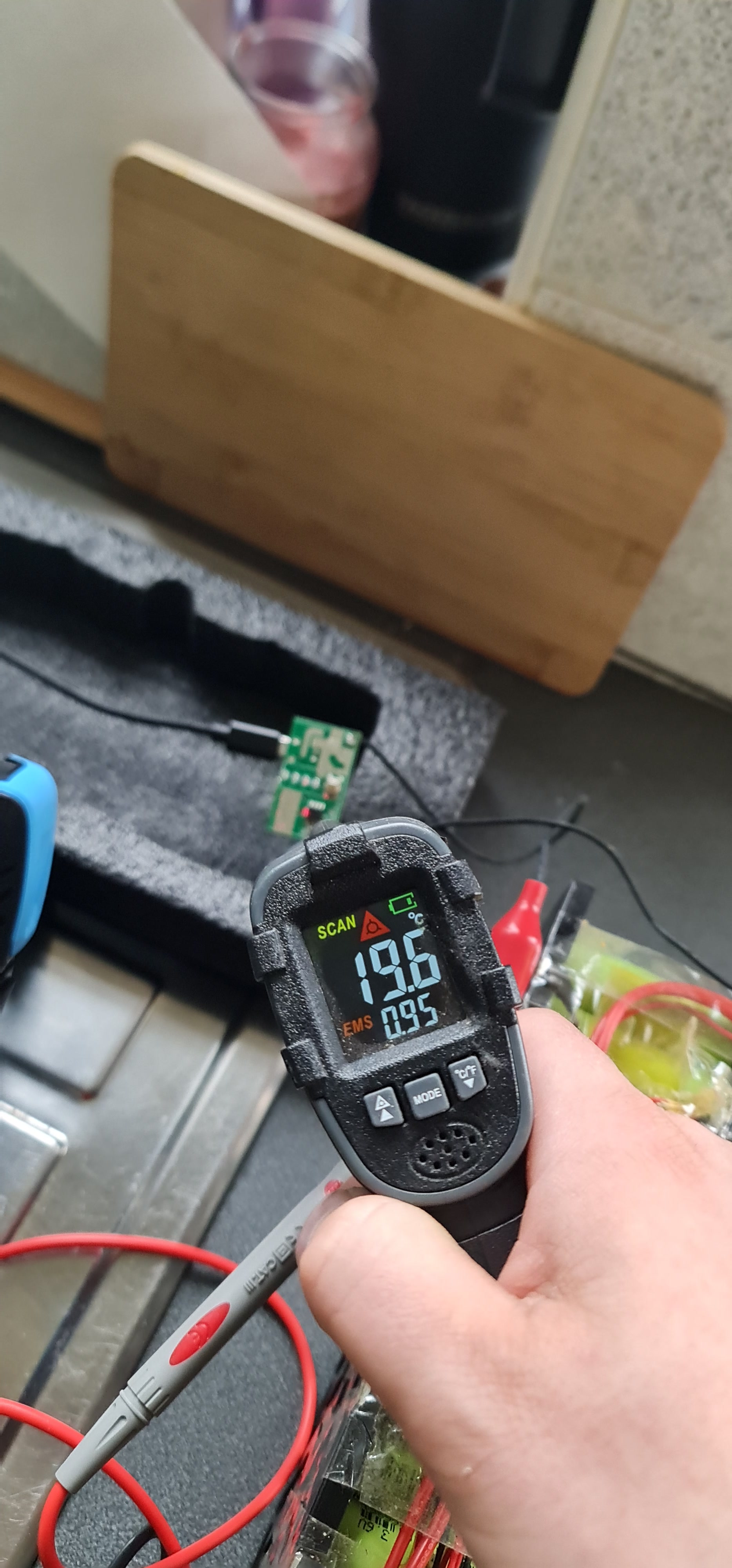
The recovery tool. A £1 powerbank PCB with wires soldered to the BAT+ and BAT- pads. Hot glue holding the micro USB connector because of course it is. No low-voltage lockout, no questions asked — plug in USB power and it pushes current into whatever's on the other end.
The process:
- Pull each suspect cell from the pack
- Check voltage with a multimeter — confirm 0V or near-zero
- Connect to the powerbank PCB via the battery pads
- Monitor voltage rise over 15-30 minutes
- If the cell climbs to 3.0V without getting hot, move it to a proper charger for the rest of the cycle
- If it gets warm, swells, or smells — bin it immediately
The powerbank PCB trickles in at around 500mA-1A depending on the board. Slow enough to be relatively safe for recovery. Fast enough to know within half an hour whether the cell is coming back or not.
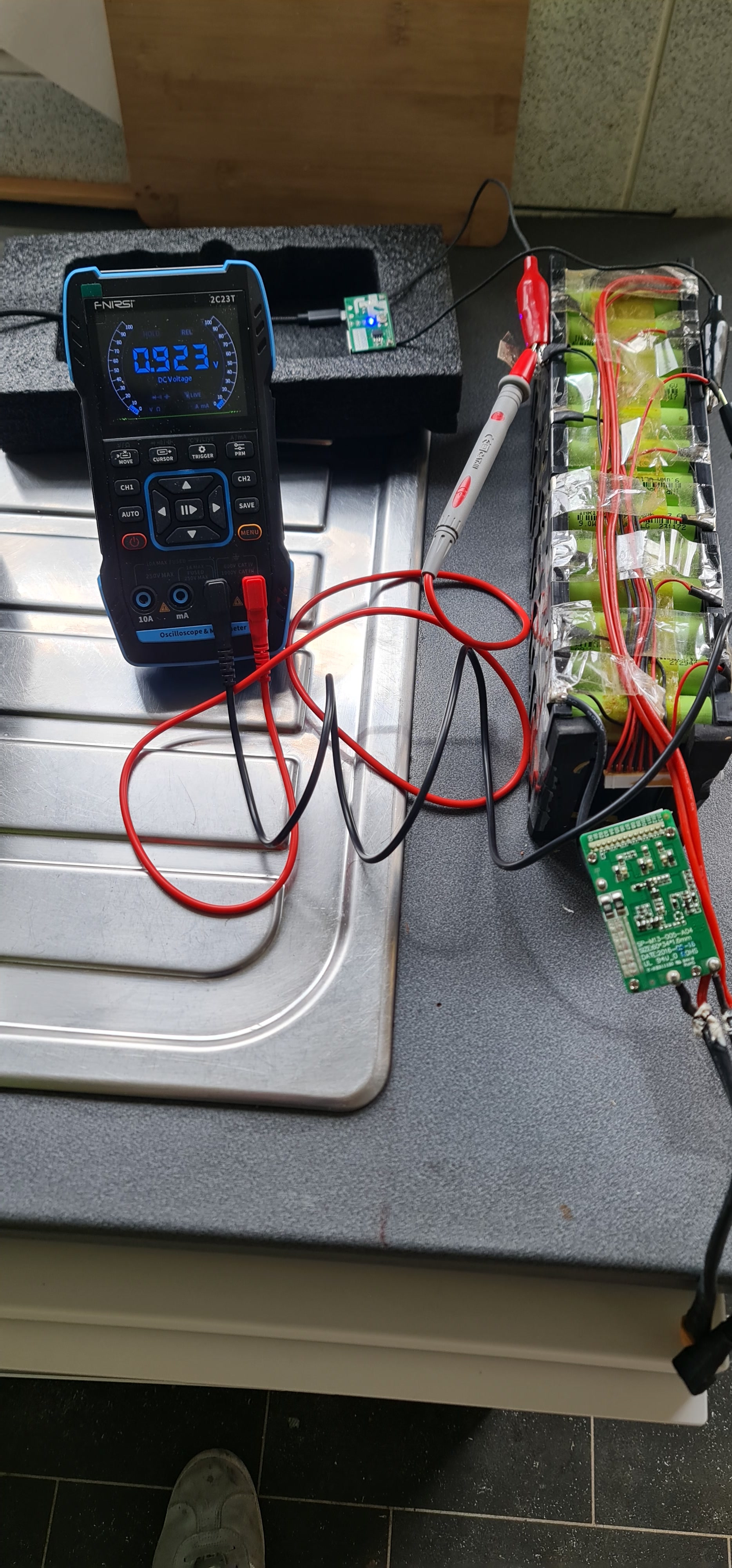
0.923V. That's not a battery — that's a paperweight. The FNIRSI is probing individual cells while the pack sits open on the kitchen worktop. You can see the 13S cell arrangement and the BMS wiring.
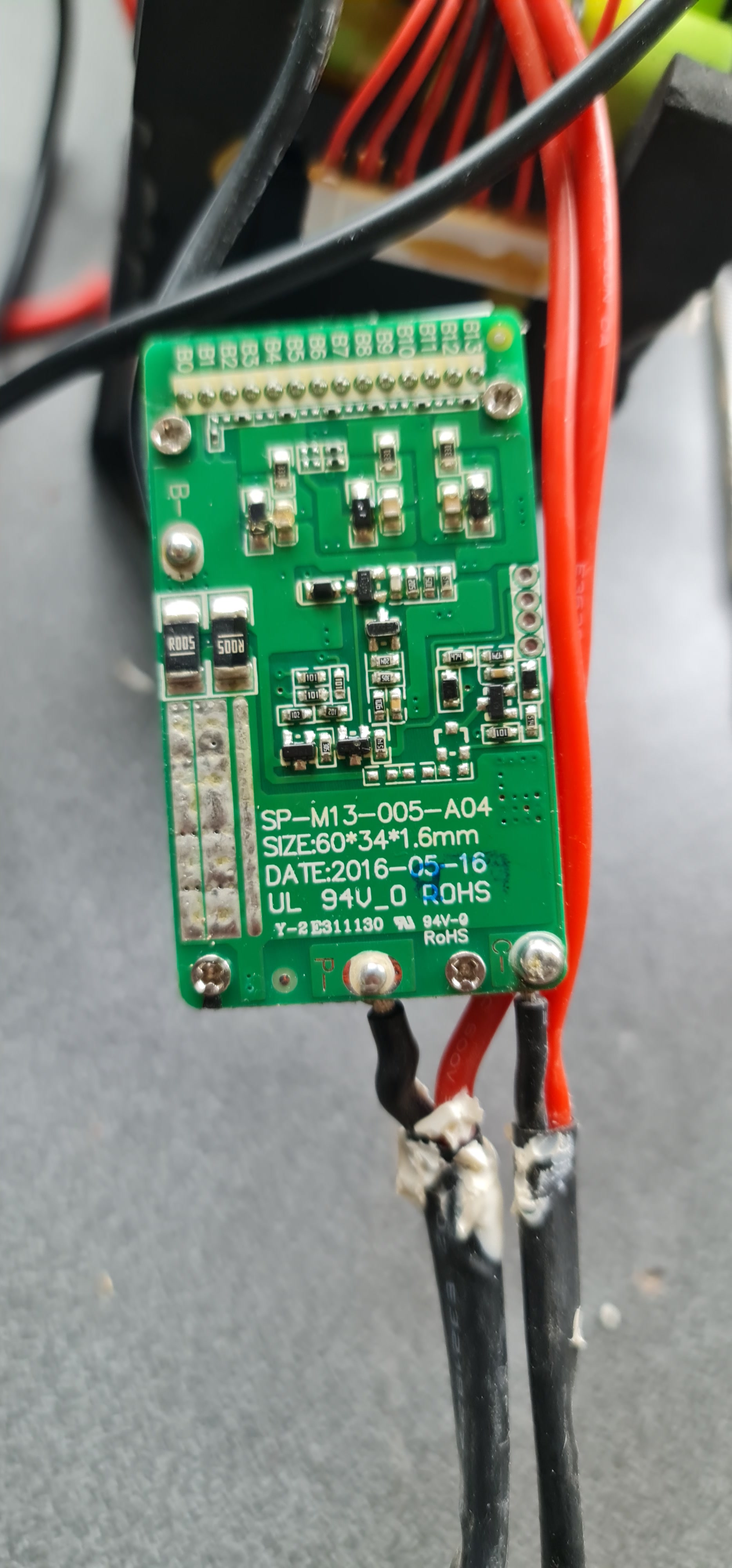
The BMS itself: SP-M13-005-A04, 60x34mm, manufactured May 2016. Ten years old, still intact. The balance leads and power wires are original. This is the gatekeeper that refuses to charge when cells drop too low — which is why we're going around it.
Timeline
The first photo was taken at 15:01 — 0.923V. Dead flat. Twenty-five minutes later:
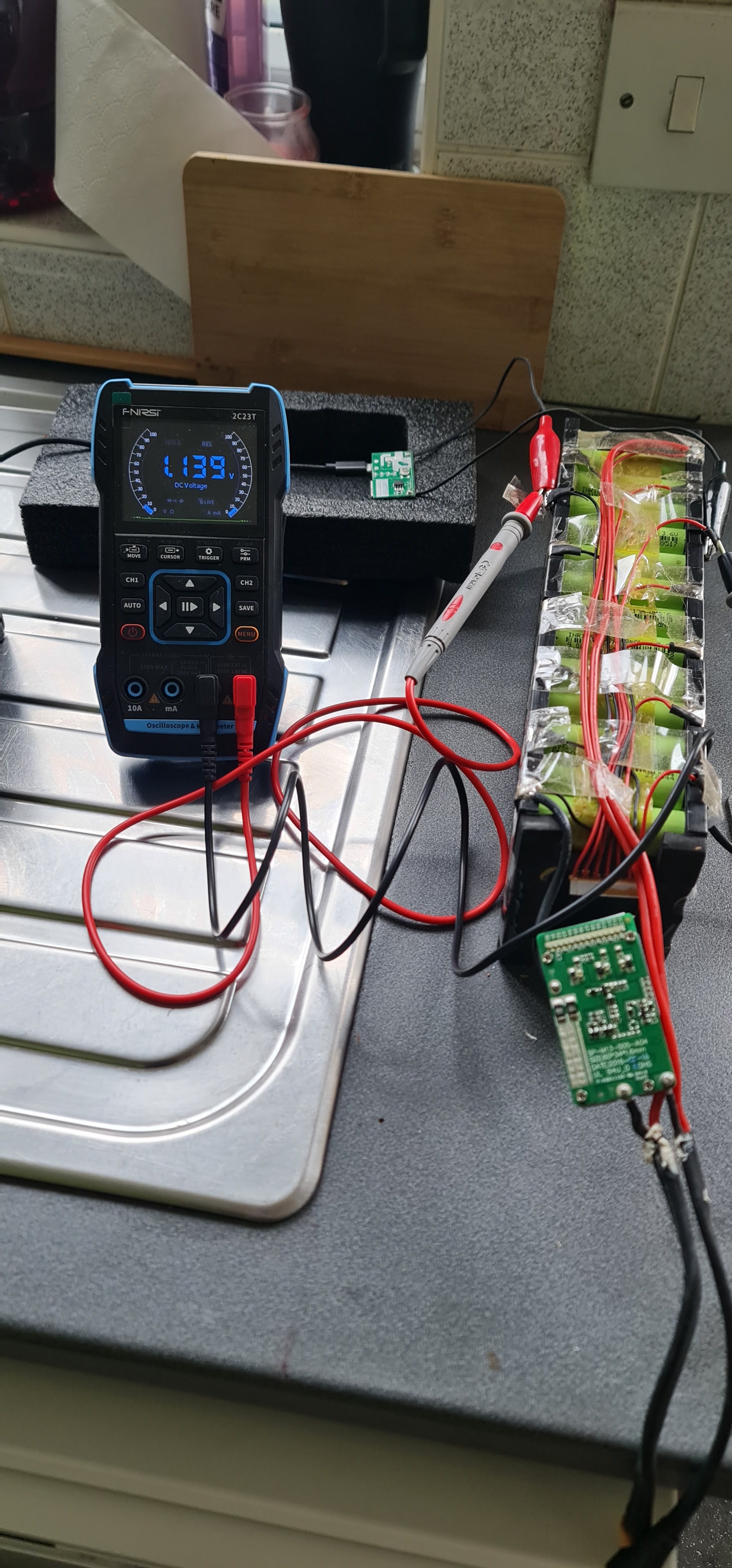
15:26 — 1.89V. It's coming back. Voltage climbing steadily, cell is cool to the touch, no swelling. The powerbank PCB is doing its thing. Still a long way from 3.0V where a proper charger can take over, but the trajectory is good.
Then It Went Wrong
Twenty minutes later, the voltage started dropping. Not stalling — actively falling. The cell had peaked and was bleeding charge internally.
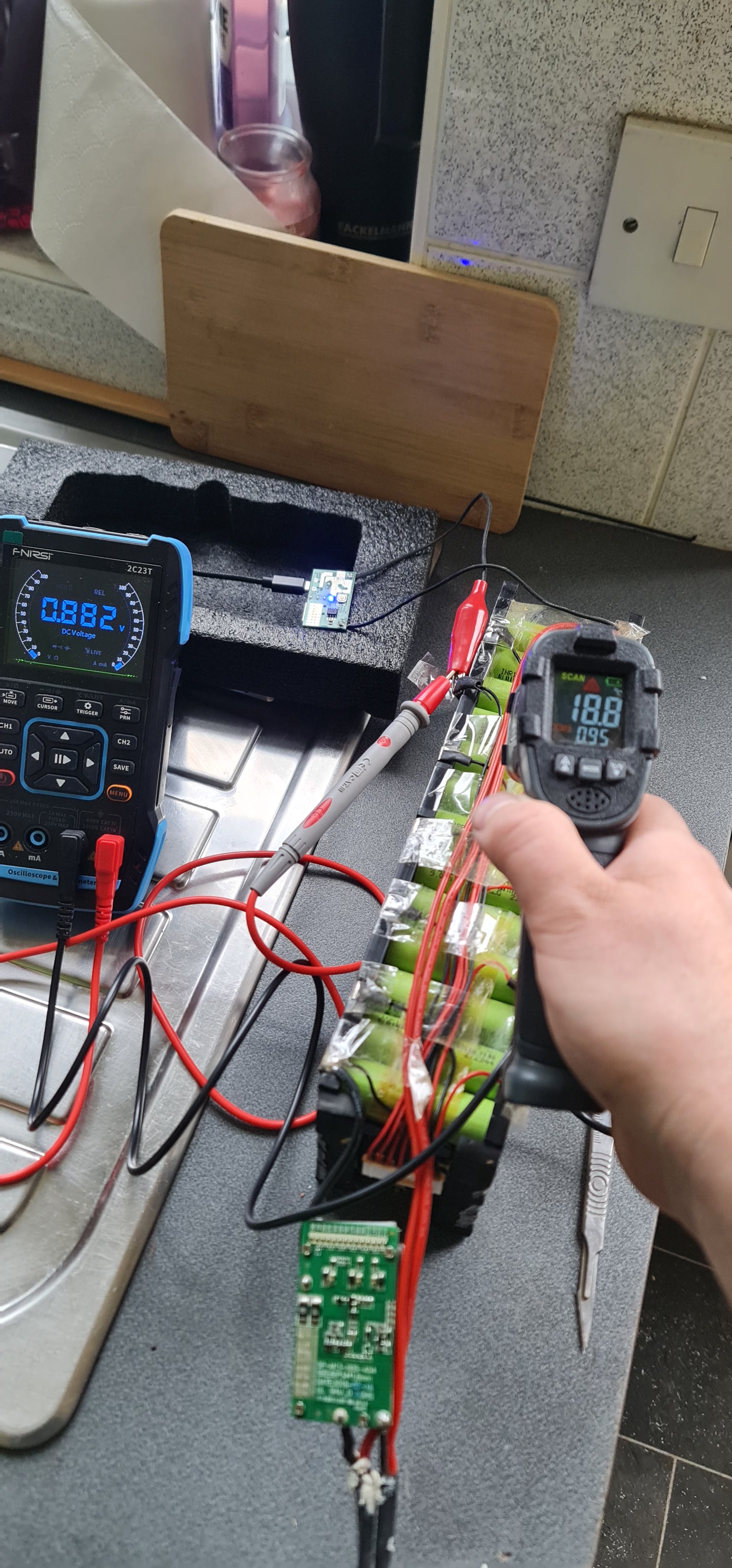
15:47 — 0.882V. Lower than where we started. The IR gun reads 18.8°C — ambient temperature. No thermal event, but the voltage tells the whole story.
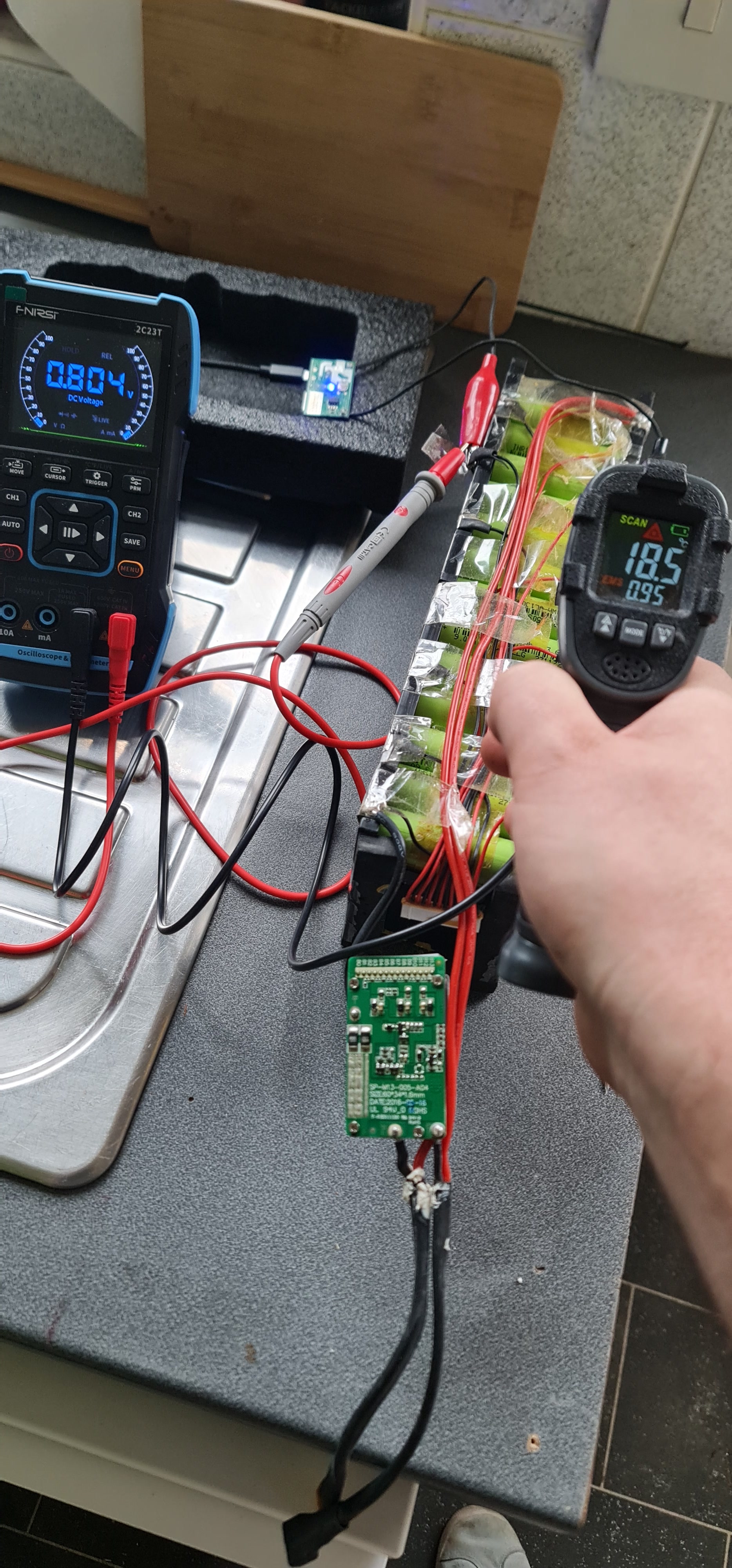
16:04 — 0.804V and still falling. IR reads 18.5°C. The cell is accepting current from the powerbank PCB but can't hold any of it. That charge is going somewhere — through an internal short.
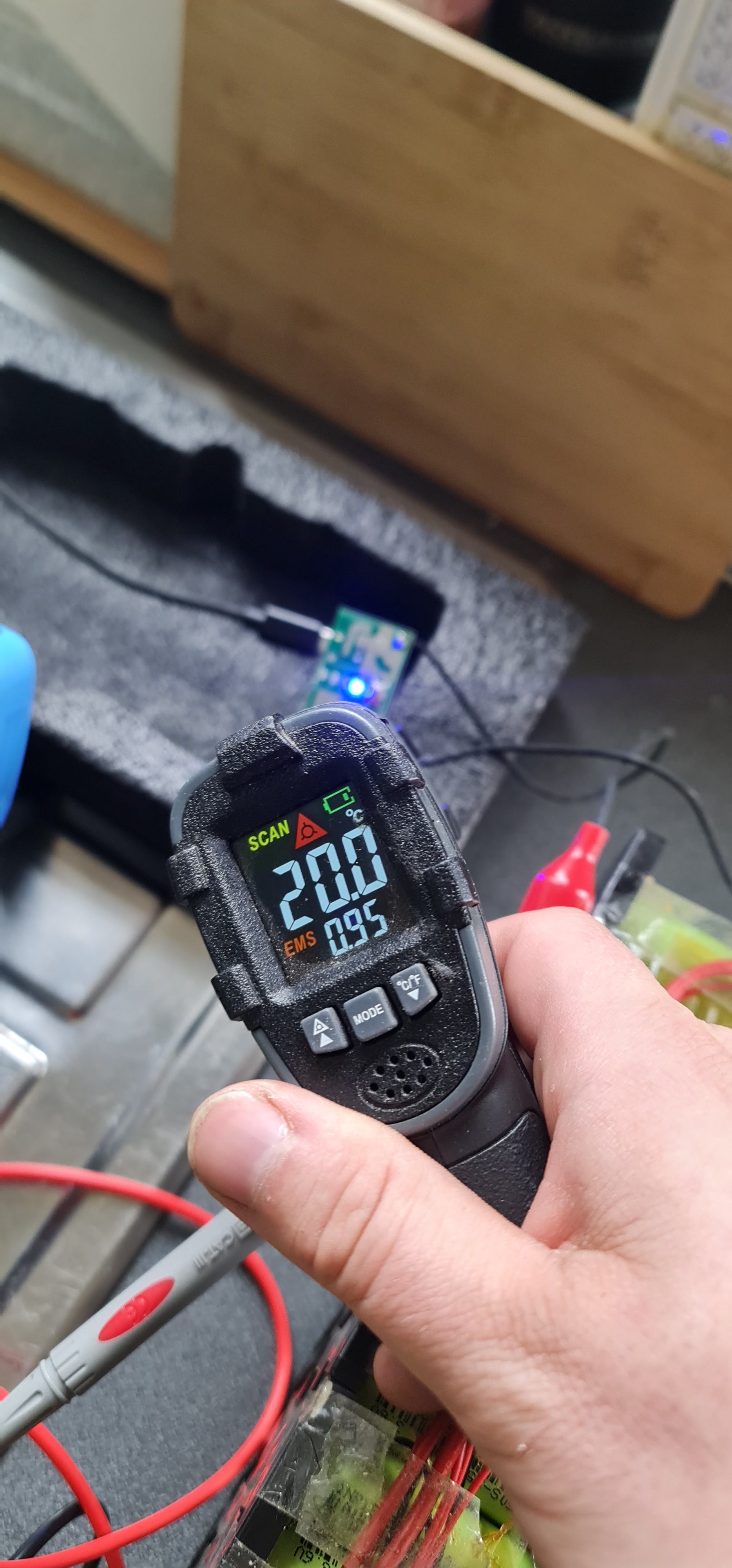
16:05 — final temperature check. 20.0°C. Barely above ambient. At least it went quietly.
What Happened
Lithium dendrites. When a lithium cell sits at 0V for a long time, the SEI layer — the protective film on the anode that keeps lithium ions moving in an orderly way — decomposes. Without that film, lithium deposits unevenly during charging. It plates as metallic crystals, tiny needles that grow from the anode surface toward the cathode.
Eventually one of those needles bridges the gap. That's an internal short. Every electron you push in bleeds straight through the short instead of charging the cell.
The initial voltage rise was surface charge — the cell's remaining electrode capacity soaking up what it could. The drop was the short draining it faster than the powerbank could fill it. A soft short, not a hard one — which is why the temperature stayed at ambient instead of going thermal.
This cell is dead. Properly dead. Bin it.
The Score
Four cells in this pack showed the same pattern — rise then drop. Those are coming out. The remaining nine are all sitting above 2.8V, which means their SEI layers are intact and they never hit the dendrite zone. Those should recover normally on a proper charger.
Four replacement cells from scrap packs, capacity tested and matched, and this battery lives again.
What I'm Looking For
A recovered cell needs to:
- Reach 4.2V on a full charge without excessive heat
- Hold voltage for 24 hours (no significant self-discharge)
- Deliver reasonable capacity on discharge (even 60-70% of rated is acceptable for a trike battery)
Any cell that fails those tests gets recycled, not rebuilt into the pack. I'm not putting a dodgy cell into a 48V series string that's going to sit under a seat.
Why Bother
Because this pack cost nothing. The motor cost nothing. The controller cost nothing. Every part of this drift trike powertrain was salvaged — from the street, from a family member, from the parts bin. Buying a new 48V battery would cost more than everything else combined.
And honestly, understanding what's happening inside these cells — learning to assess them, recover them, test them properly — that's worth more than the battery itself.
The Upstream Question
Replacing four cells fixes the symptom. But why did four cells in a 13S pack drop to 0V while the other nine held above 2.8V?
A healthy BMS should balance the pack — bleed off the high cells, protect the low ones, cut the load before any cell hits dangerous territory. If four cells were allowed to discharge to zero while the rest stayed healthy, something upstream failed first.
Was it the BMS balance circuit? A cold solder joint on a balance lead? A cell group that was never balanced properly from the factory? Did one cell go weak first, drag its parallel partner down, and cascade from there?
Swapping cells gets the pack running. But if the BMS let this happen once, it'll let it happen again. Before this battery goes into the trike, the BMS gets put on the bench. Every balance lead, every MOSFET, every sense resistor. Find the actual fault, or you're just feeding fresh cells to the same problem.
Fix the cause, not the consequence.
Recovered from the kerb. Rebuilt on the bench. The drift trike build continues at indigo-nx.com.